

Szymon Kudranski has built a career as one of comics’ most distinctive writer-artists, known for blending atmospheric storytelling with striking, cinematic visuals. After working with major publishers like Marvel and DC, Kudranski has carved out a powerful voice in creator-owned comics through projects such as Something Epic and Blood Commandment, where he takes full control as both writer and illustrator. His latest series, No Man’s Land, marks a bold shift into Cold War–era thriller territory, inspired by the real-world tension of the Diomede Islands and the fragile line between global powers. In this interview with Anthony Andujar Jr., Kudranski discusses the evolution of the project, the challenges of independent storytelling, and the themes that make No Man’s Land feel especially relevant today.
NO MAN’S LAND: Szymon Kudranski interview by Anthony Andujar Jr
Interviewee: Szymon Kudranski
Interviewer: Anthony Andujar Jr
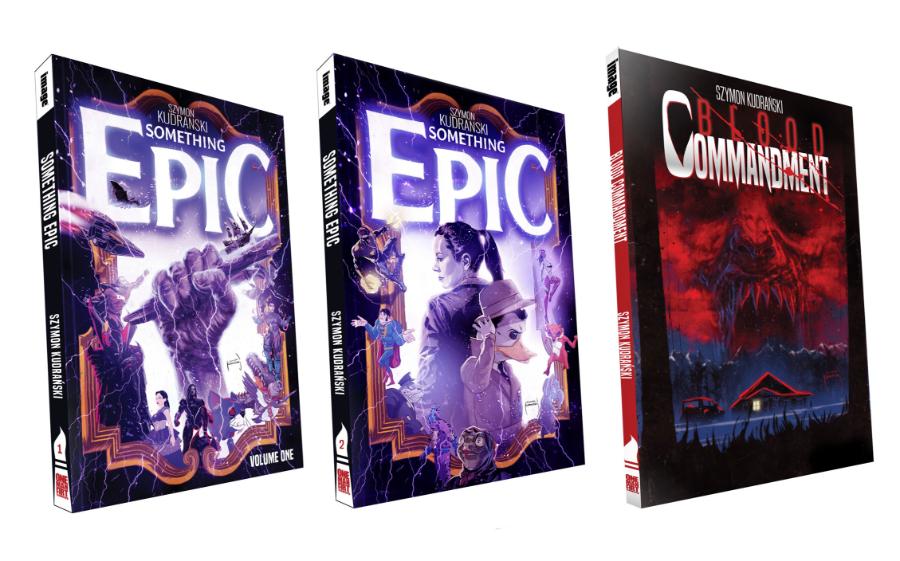
Q1. You’ve worked on a series of creator-owned books after having a long-established career at the Big Two. You’ve created standalone mini-series, such as Something Epic and Blood Commandment, each series having its own flair and unique approach to the fantasy and horror genres. Having crafted these creator-owned titles, what have been the lessons that informed your new book, the now-completed series, No Man’s Land?
SK: I’m thinking about it more from a technical and marketing perspective. Each of my single issues runs 27–28 pages instead of the standard 20, which, in a miniseries, effectively gives you the equivalent of two extra issues in the trade paperback—something that’s not always easy to fit into the market. I’m still in the process of finding the right page count without sacrificing the storytelling.
As for the creative side, nothing’s really changed—I’m still making the kind of comics I’ve always wanted to make as a solo creator!
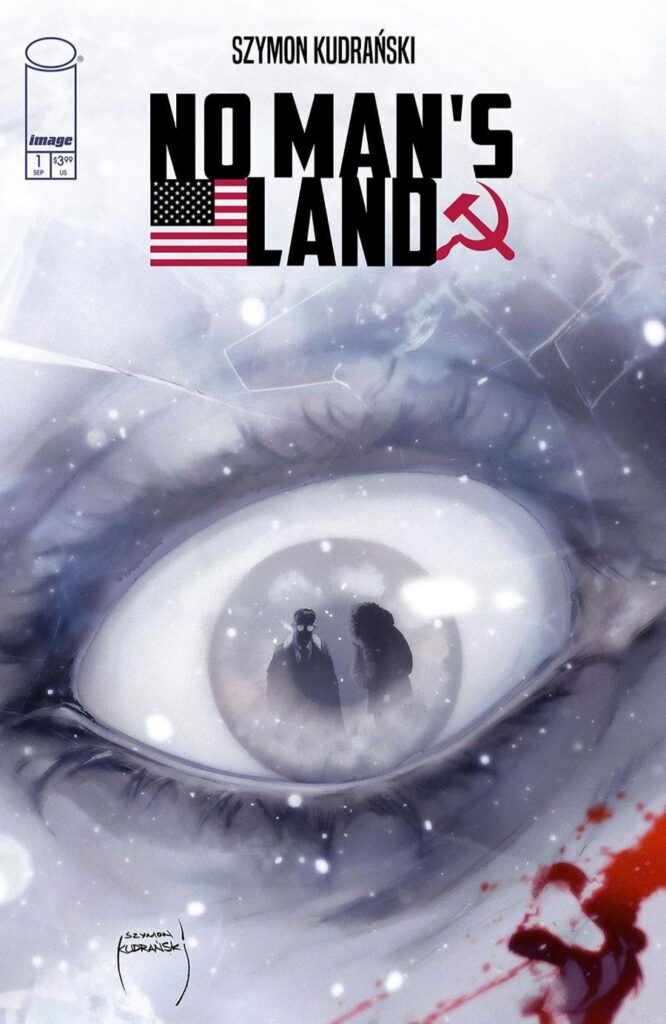
Q2 Your latest project, No Man’s Land, is a huge departure from your previous efforts, which often dabbled with fantasy. It’s a thriller, period piece centered around the Cold War. For three months, people can cross an ice bridge that connects the U.S. and Russia. What inspired this title to be made? What is it about the Diomede Islands and the Cold War that made it worthwhile to explore?
SK: It really comes down to the location. The moment you hear about the Diomede Islands, it just grabs you. Two islands, only two miles apart, yet separated by almost an entire day because of the time zones—and by two completely different political systems. And for a short period each year, they’re connected by an “ice bridge,” where you can literally walk from Russia to the U.S. in just a few minutes. Both islands were once inhabited (today, only one is).
That was the spark for me—my imagination just went: “There’s a thriller right here.”
Q3 An FBI Agent and a KB agent are the main protagonists of No Man’s Land. What’s the story between these characters that drives this series? Who were the inspirations that caused you to center the story around these two characters?
SK: The agents are forced to work together. Neither side wants to officially cooperate, and neither wants to claim jurisdiction, because that would immediately provoke the other. At the same time, neither country would ever accept the other taking control of the investigation. And since this is the Cold War, true cooperation is essentially impossible.
In a situation like this—on the edge of nuclear conflict—no one is willing to take the risk of fully stepping in. The woman’s body becomes a symbol of how state interests outweigh the individual, regardless of the political system, when both sides feel like they have a knife to their throat.
The FBI and the KGB are natural enemies. As professionals in the same line of work, they’re also intrigued by each other. And as human beings, there’s still a level of mutual respect. That creates a strong, layered dynamic between them.
Q4. Given the current times we are living in, what aspects of No Man’s Land do you feel reflect the concerns people have about the world today?
SK: I think what makes No Man’s Land feel relevant today is that it deals with something that hasn’t really changed throughout history—the tension between human life and political interest. Whether it was tribes, kingdoms, or now global powers and corporations, the individual often gets lost in larger systems. In the story, the victim becomes more than just a person—she becomes a symbol of how easily humanity can be overshadowed when the world is on the edge of conflict. That’s something people still feel today.
Q5. As a creator who has so many hats as a writer and illustrator, what was the biggest development that you made on this project in comparison to your previous projects that enhanced your skills as a storyteller? And was there a specific soundtrack of music that you were listening to that informed the tone of No Man’s Land?
SK: This project has lived many lives. The first idea came to me back in 2011—back then it was entirely black and white, and the killer was far darker, with a much more disturbing origin.
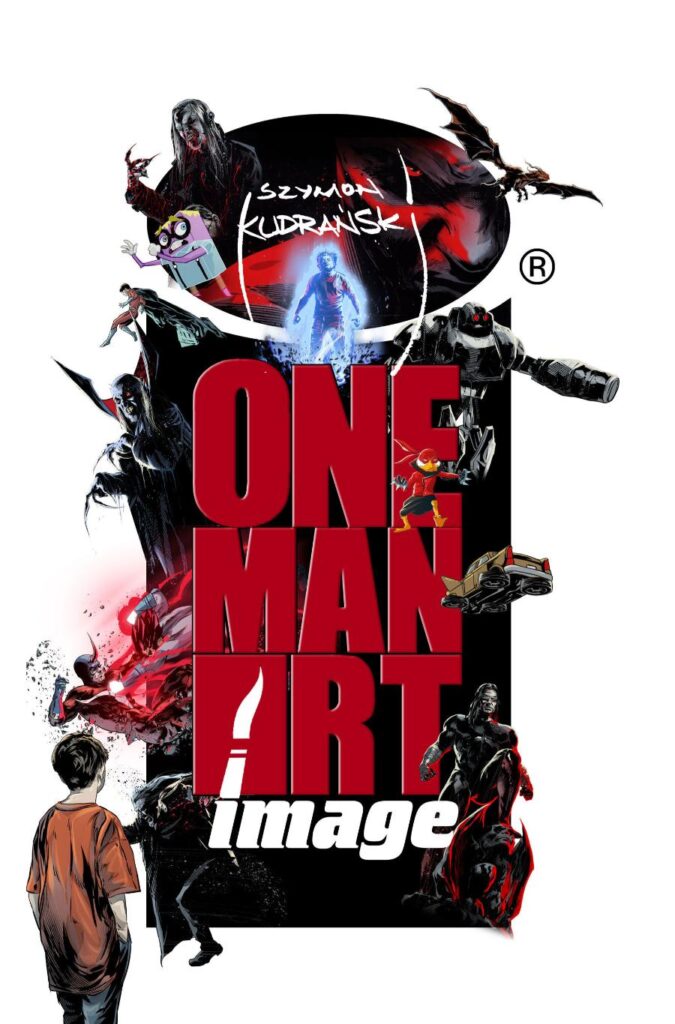
In a strange way, it was actually the first comic I ever developed under ONE MAN ART. But every time I got close to finishing it, something major would shift in my personal life, and the project would go back into the drawer—for years. 2012, then 2016… and now, finally, 2025.
Over time, everything evolved—my art, my storytelling, the dialogue, the tone. This is the third version of the story. Maybe deep down I always knew it wasn’t ready yet.
And music? Everything. Instrumentals, soundtracks, all genres—it all fed into the atmosphere.
Q7. It’s recently been announced that No Man’s Land will be collected and released in trade paperback in April. How do you feel about seeing the book collected and released in trade, having now completed the series? Are there any notes, scripts, and drafts that will also be featured in this collected trade paperback?
SK: As I mentioned earlier, each issue comes in at nearly 28 pages, which effectively adds the equivalent of two extra issues to the collection. Because of that, the trade paperback is completely packed, leaving very little room for bonus content.
I’d love to see a Deluxe edition in the future. There’s a huge amount of additional material—alternate endings, unused pages, and story elements that didn’t make the final cut.
Q8. It has also been announced that the No Man’s Land movie adaptation is being developed by A/Vantage Productions. What are your thoughts about the now-completed series being made into a feature film? Additionally, what do you hope the adaptation retains that is true to the spirit of the book? Will you have active involvement in the production of the movie?
SK: A/Vantage Pictures is run by a young and ambitious team with strong film credits. Right away, I was drawn to them—they really reflect the same mindset I have with One Man Art at Image Comics. We’re still very early in the process, so there’s not much more I can say yet, but yes, I’m involved in every step.
Q9. Are there any upcoming projects that you have on the way for readers to keep an eye out for, and where can they stay up to date on it?
SK: The No Man’s Land TP is coming out in April. The third story arc of Something Epic begins soon, and there’s another solo book to keep an eye on in 2027!
 Brian Isaacs - Executive Editor / Publisher