

From the surreal energy of Spümcø cartoons to the haunting aesthetics of Aeon Flux and Ghost in the Shell, illustrator and comic creator Scott Gerard Ruhl draws from a kaleidoscope of animated and printed influences that shaped his unique artistic voice. Blending cyberpunk decay with fairy tale wonder, his creator-owned series FutureLux and its vivid companion Fever Dream explore deeply personal stories set in a fractured future. With a love for analog process, a DIY ethic, and a drive to surprise readers emotionally and visually, Ruhl crafts comics that challenge convention and reward curiosity. We spoke with him about his inspirations, process, and what’s next for Rain and the world she inhabits.
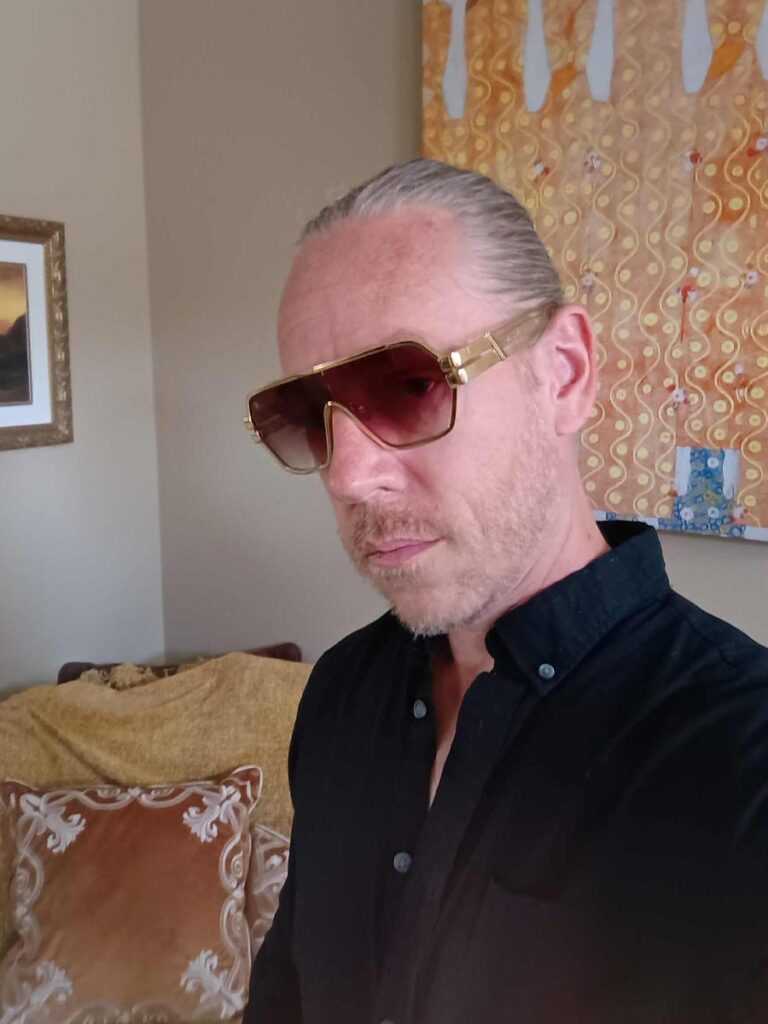
Interviewee: Scott Gerard Ruhl
Interviewer: Anthony Andujar Jr
Q1. What were your inspirations that inspired you on the path of illustration and creating comics? What mediums and albums impacted the journey of your work?
SGR: I’ve always been more inspired by animation than comics, at least initially. Stuff like Fleischer Brothers, Tex Avery, and Spümcø cartoons. Later on, that inspiration got blended with Peter Chung’s Aeon Flux and anime like Akira and Ghost in the Shell. Comics-wise, I was influenced earliest by Mad Magazine and Archie Comics, then later on stuff like Sam Keith’s Maxx and David Mack’s Kabuki, until I discovered alternative indie comics like Dan Clowes’ Eightball, Dave Cooper’s Weasel, and Chris Ware’s Acme Novelty Library. Junko Mizuno remains a massive influence on me. FutureLux was specifically influenced by Mizuno’s works, along with children’s fairy tales such as Alice in Wonderland, The Wizard of Oz, and Winnie the Pooh.
Q2. You’ve worked and produced a couple of comic books for the last few years, particularly with creating the adult sci-fi, fantasy, and horror series, FutureLux. The story centers on the protagonist, Rain, a beat cop traumatized by her friend’s murder, seeking to solve the mystery and deliver justice in a future world that lacks value in the word. What was the development process like from the scripting, illustration, formatting, and production?
SGR: I created the characters Rain and Vanity back in high school. They were different then and went through many iterations, but the gist remained the same: friends becoming enemies. I started with an initial 3-page comic strip called “Dreamsicle,” unsure where I was going to go with it, and with no real publishing plan. I would throw the pages on a Blogspot site, but never really drew any traffic to it. The first issue was created on the page with no script, just doing a little bit here and there over a long period of time. When I decided to publish it, I sat down and wrote an outline for seven issues. I decided to call the comic FutureLux and make “Dreamsicle” the lead story with a funny animal backup comic. Each issue is outlined, then I thumbnail each page, that’s where I do the writing and dialogue. I then pencil on Bristol board, due to working large scale on 19″x 24″ paper. I ink on vellum with a Pentel Fude brush. I have large rolls of vellum that I cut and staple to the Bristol board. I then scan it in sections and color it in Photoshop.
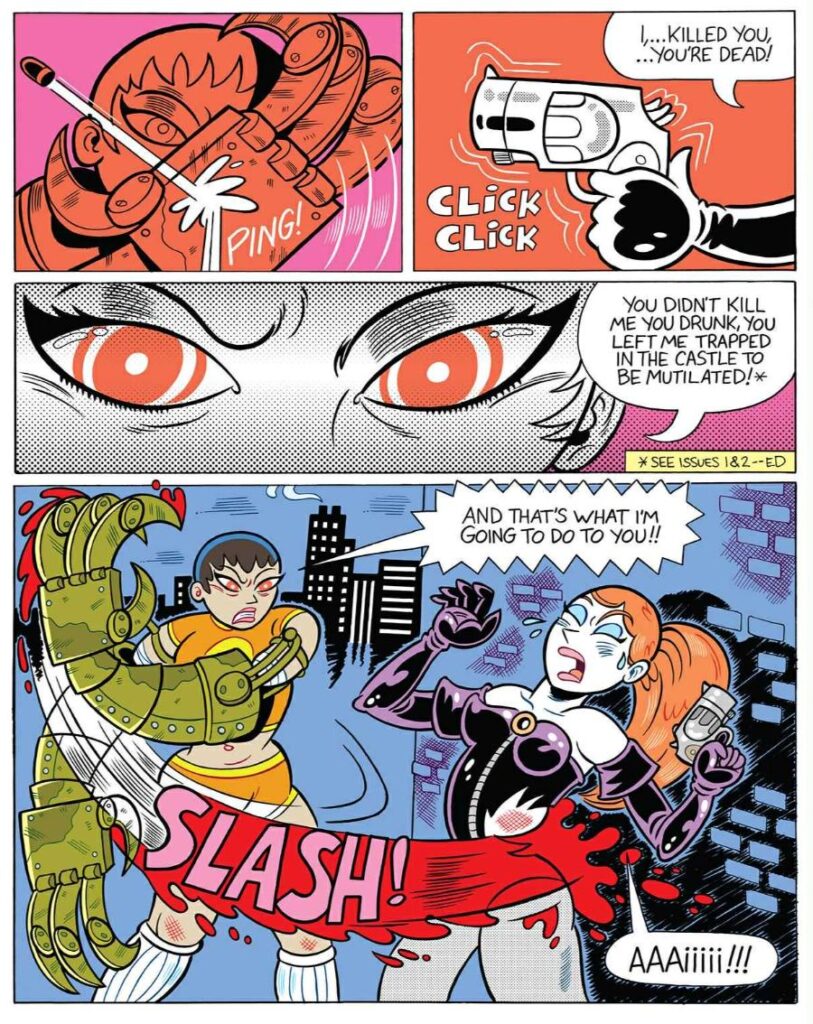
Q3.You now have a new series called “Fever Dream,” which continues the story from “FutureLux,” specifically following the events of issue three. What was your creative process, and what narrative decisions influenced your approach to this new installment and its format?
SGR: Fever Dream started as a mini-comic. It’s an interlude that takes place after the events of the third issue of FutureLux. It shows the events that have happened so far and events of things to come. It’s mostly free of dialogue and is meant to be a showcase for my art more than the previous three issues. I wanted it to pop. It’s only 12 pages, but I decided to print it in oversized magazine format. It won’t be reprinted but will be included in the eventual collection.
Q4. What is it about the world of FutureLux and Fever Dream that gravitates you to the genre of cyberpunk and sci-fi?
SGR: Hmm, I dunno. I guess it’s a fascination with the end of the world and society crumbling. It starts as more of a fairytale inspired by children’s books, so I thought it would be interesting to connect the two. Where this world ends up will always be a curious wonder to me.
Q5. As a writer and illustrator, what do you find is the most challenging when making creator-owned comics? Additionally, what do you find rewarding that makes up for the hurdles?
SGR: The most difficult thing is getting people to look at it. Selling an original IP is hard as hell. The general public wants to see things they’re already familiar with. The most rewarding part is finding that crowd that is looking for something different and gets what I’m trying to do. It’s the best feeling connecting with people who enjoy your work.
Q6. As the creator of Fever Dream and FutureLux, do you plan to continue Rain’s story? Will other installments explore deeper into the world that Rain inhabits and other characters? Or will it remain solely focused on Rain?
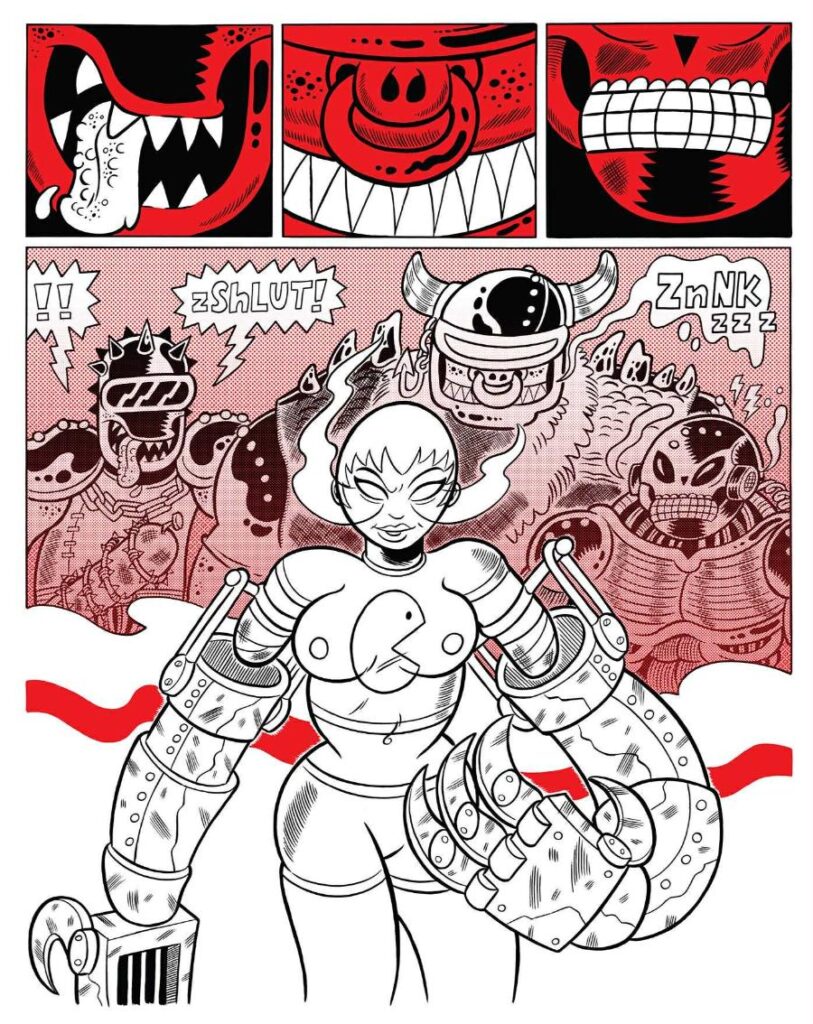
SGR: Issue 4 will focus on Sven and how he became a zombie. It takes place before the first issue and finally explains everything we’ve seen so far. It’ll show how he linked up with Bianco the Bear and leads directly into the first issue. It’ll be the last flashback issue in landscape format. Issues 5-7 take place in the future and focus entirely on Rain and her battle with Vanity, and eventually the Space Skunk.
Q7. When mapping out the creative process to completion, how long does it take to produce an issue? When creating a series, is it a free-form/ Marvel Method approach, or do you create a series of scripts in advance before drawing everything out?
SGR: It takes me about 8-10 months to make an issue. I keep trying to get quicker, but I also keep getting more ambitious with each issue, which works against that lol. It’s fully scripted and thumbnailed, but some writing will occur on the page. I try and keep an open mind and let happy accidents happen.
Q8. What can readers come to expect from Rain and her journey within the worlds of FutureLux and Fever Dream?
SGR: I hope people get to experience the feeling of being a kid and growing up and all the wonder and challenges that overtake us and reshape us as we get older. I hope I continue to surprise them along the way and pull at their heartstrings in unexpected ways.
Q9. Are there other stories outside of Future Lux and Fever Dream that you plan to explore? What other genres have been piquing your interest that you’d like to take a crack at?
SGR: “Dreamsicle” is the main story inside FutureLux, and the original idea was to create a new headliner once “Dreamsicle” is complete. I have an idea that may split the book into two headliners, both are adventure stories that, while seemingly unconnected, share a similar McGuffin. That’s about 5-6 years away right now, but I have been slowly writing it and workshopping it in my head. I haven’t developed any of it on paper yet.
Q10. Where can readers find your work and follow for updates on future works?
SGR: I post updates and process work on my Instagram @scottgerardruhl. There’s a webshop link in my bio where you can pick up my books and art prints, https://futureluxuryisburning.square.site/
Currently, I’m part of the Power Pulp umbrella initiative. A group of self-published cartoonists that have banded together to get our books into stores, selling our comics wholesale directly to comic shops. Distribution for self-published comics is non-existent, so we decided to do something about it for ourselves. So far, the response has been very positive, and we have plans to grow in the future. You can find my books on the Power Pulp website along with the other creators at https://powerpulpcomics.com/ and follow Power Pulp on Instagram at @powerpulpcomics.
 Dan Kleiner
  Brian Isaacs - Executive Editor / Publisher