
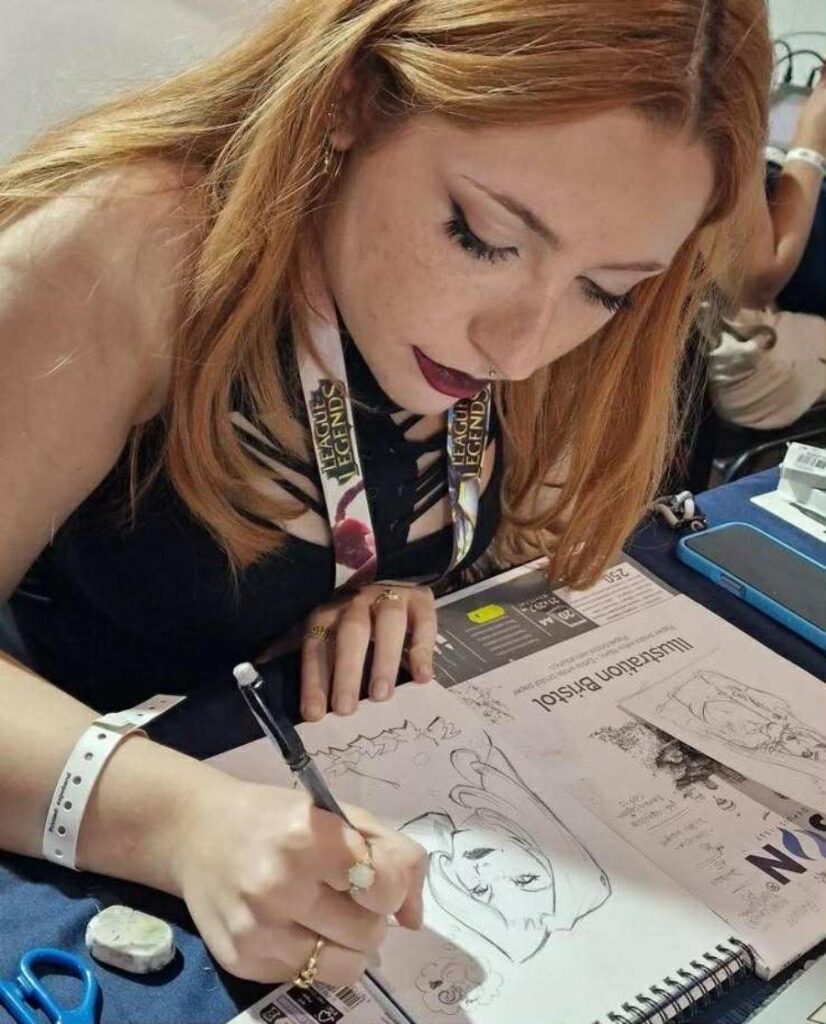
Italian illustrator Roberta Sammarco discovered her path to comics through her father’s Bonelli Tex collection and her brother’s PlayStation games, where watching Spider-Man swing across virtual skylines sparked a fascination with movement and storytelling. Early favorites like Paperinik and Geronimo Stilton led her into Marvel and Disney, shaping a style that blends American dynamism with European precision.
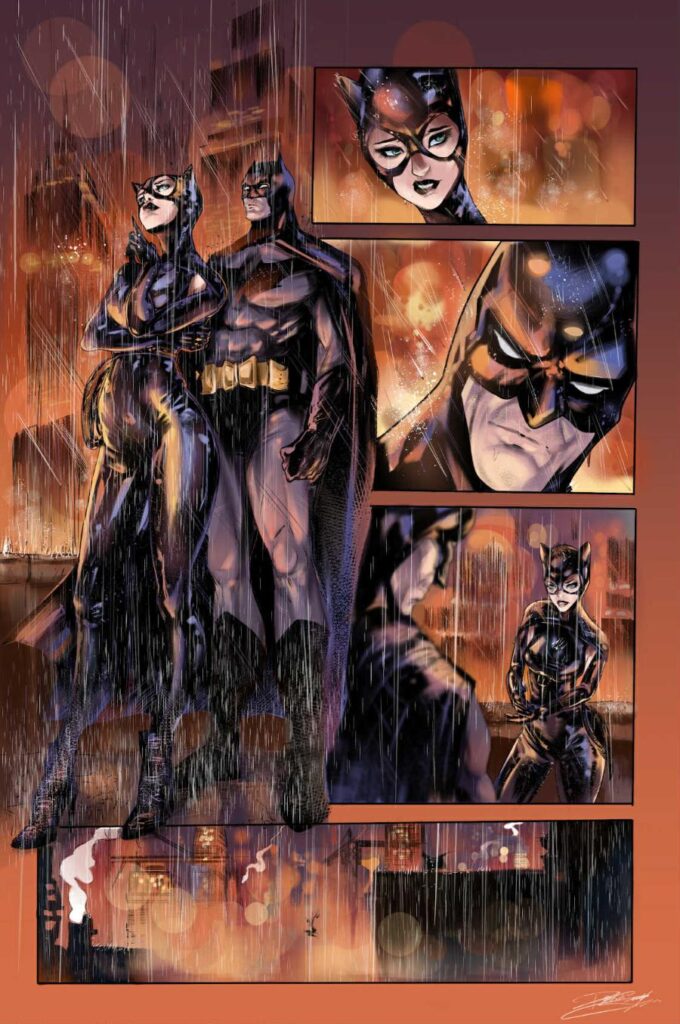
Influenced by artists such as J. Scott Campbell, Dan Mora, Jorge Jiménez, Marco Failla, and Gabriele Dell’Otto, she channels Italy’s expressive gesturing into fluid character poses and dramatic compositions. Today, Sammarco’s independent work reflects both discipline and freedom — refining anatomy, experimenting with mood, and letting music guide tone — whether it’s pop for lighthearted moments, Linkin Park for action, or jazz for femme fatales like Catwoman and Poison Ivy. She spoke with us about her journey, her influences, and what it means to grow as a storyteller in today’s comics landscape.
Interviewee: Roberta Sammarco
Interviewer: Anthony Andujar Jr
Q1 What started you on the path to comic books and illustration?
RS: When I was little, my brother Dario often played PlayStation, and my father had a complete collection of Tex comics by Bonelli. I remember always leafing through them and being enchanted by watching my brother play video games, especially Spider-Man for PlayStation 2. I was always the kind of kid who liked to watch rather than play, so I spent a lot of time observing the buildings in the game, Spider-Man’s movements, the interactions… I was looking for a way to get closer to this world and to my brother, so I started researching, reading comics (not just Marvel, I started with Paperinik, Mickey Mouse, Geronimo Stilton, Tea Sisters), and soon discovered that I actually liked them quite a bit!
Q2 What were your influences in comic books, fine art, film, and music when you started your path into comic book illustration?
RS: My influences have definitely been Campbell, Dan Mora, Jimenez, and also Italians such as Marco Failla, or even Alessandro Cappuccio, and Gabriele Dell’Otto. As for music, I always try to match what I’m drawing, the moment, the scene, with music that transports me to that moment. If I’m drawing something peaceful, I might go for pop music, but if I’m drawing sad scenes, I might go for classical music, violin, piano… For action scenes, for example, I go for Linkin Park, Arcane playlists… So I vary a lot in terms of music.
Q3 Given that you’re from Italy, what is it about your home and environment that nurtured the development of your work in the arts?
RS: Well, one thing that Italians are definitely known for is their gestures. It’s true, we gesticulate a lot! And sometimes we understand each other without even using words. This has helped me a lot in Gesture Drawing when it comes to moving a character. Attitude, pose, perhaps a particular reaction to a piece of news, and so on!
Q4 What are some of the challenges when getting your foot in the door with publishers as a comic book illustrator?
RS: Well, surely the first challenge is with oneself, not so much with others. I think that self-awareness can really help a lot in this job. And then the right publisher! I see us all as goldfish in a big tank, and we are all trying, with our own means and abilities, to find a place for ourselves in this tank. I believe that good skills and the right publisher are closely connected.
Q5 As an indie artist, what are the benefits and strengths that you’ve acquired as an illustrator and visual storyteller?
RS: As an independent artist, I definitely have a lot of freedom of expression. Obviously, I think the way I want to, I set my own schedule, I’m not in a hurry because I don’t have a deadline, for example. Or, on the contrary, since you are free from contracts, you can perhaps focus more on anatomical concepts, you can resume your studies with greater intensity (you never abandon your studies, even when you are working), you can prepare yourself better for the world of work, and build a better portfolio. The important thing is to keep in mind that who you are today (not only in terms of drawing) does not define who you will be tomorrow.
Q6. With social media having a heavy impact on artists gaining visibility, what is something that you feel isn’t discussed enough amongst illustrators?
RS: I believe that we don’t talk enough about personal well-being and, above all, about pension funds or even the creative process behind them. Sitting in front of a computer for 10 or 12 hours straight will eventually lead to early posture and general health problems, as will not following the healthiest diet possible. Furthermore, social media only shows the finished work, in short, the end of a creative process. But we are never told about the study behind it, perhaps through photos of environments or poses, research into color palettes, or artists who have already done it before us.
Q7. When navigating projects, what do projects gauge your interests in, and have there been any projects that you’ve worked on that you’d like to revisit?
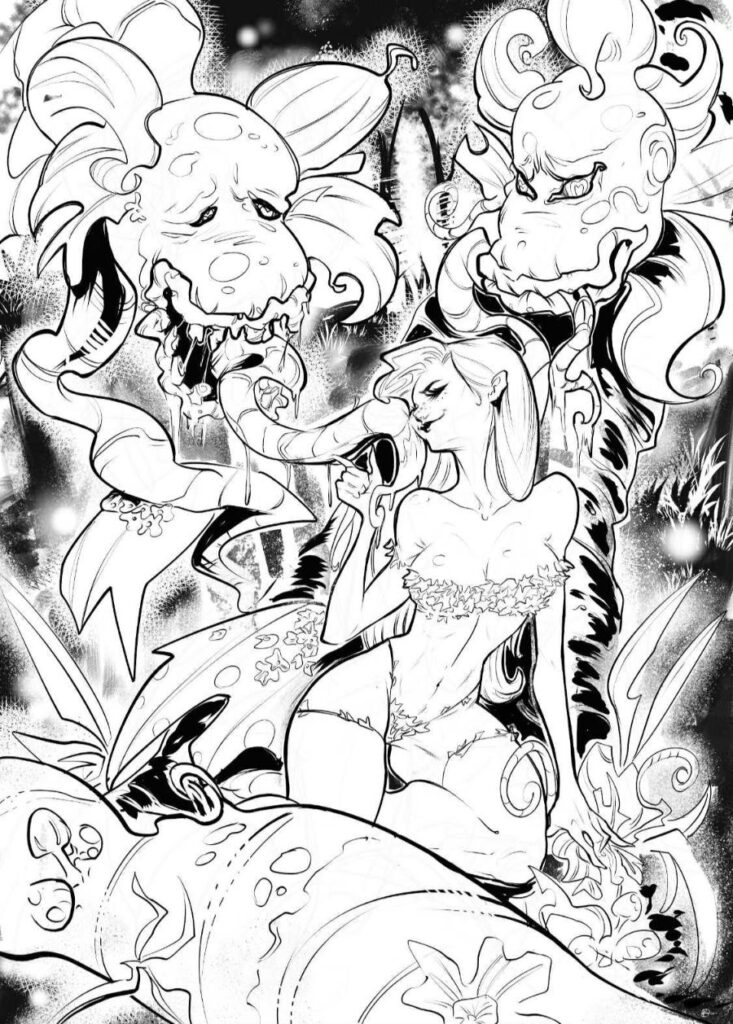
RS: Let’s say that obviously I prefer projects with a superhero or erotic theme, but I consider myself quite versatile. As for the projects I’ve already done… the answer is no, I don’t want to revisit them. But not because I didn’t like them, or because I’m not satisfied with the work, but because I strongly believe in growth. Looking back, reviewing your work, and noticing how some things could have been resolved, drawn, or inked differently, in a more functional way, is a sign of growth. I have enormous respect for my old work, even though it’s full of mistakes,
But it reminds me that at that precise moment, I was at that level, and that’s okay.
Q8. You’re a fan of the big two, though if you were to have your start, which of the two would you like to start with if given the opportunity, and what book or team would you want to illustrate?
RS: I would certainly enjoy Marvel because, as I mentioned previously, it was Marvel that sparked my interest in drawing, thanks, of course, to my brother (who I’m not sure knows about this whole story and who is one of the reasons behind it all). I’d like to draw a run of Black Cat and Spider-Man, or one of Scarlet Witch and Vision, or maybe something X-Men– themed like Rogue and Gambit!
Q9.. As an illustrator, what’s your go-to genre or genres of music when illustrating projects? Was there a particular project where you made a specific playlist that aided you in capturing the essence and atmosphere of the story or imagery drawn?
RS: I should have read all the questions, because I’ve already answered this one, but I’ll go into detail this time! Well, I’ve definitely created a playlist with erotic-themed music for when I’m doing illustrations with subjects like Catwoman, Poison Ivy, or even Punchline. It’s music with explicit lyrics, sometimes mixed with a bit of jazz, which gives me that Femme Fatale feeling, like the atmosphere created around Jessica Rabbit. But as I said before, I vary a lot depending on the moment I’m depicting and what I want to convey with my work.
Q10. Are there any projects in the pipeline that readers should keep an eye out for?
RS: Well, let’s just say that I can’t reveal much at the moment… All I can say is to keep an eye on Mirage Comics, and beyond that, I can only say that something is brewing…
You can find Roberta Sammarco’s work on these platforms:
Instagram: Roberta_Sammarco_art
Twitter: Darsena_art
 Dan Kleiner