
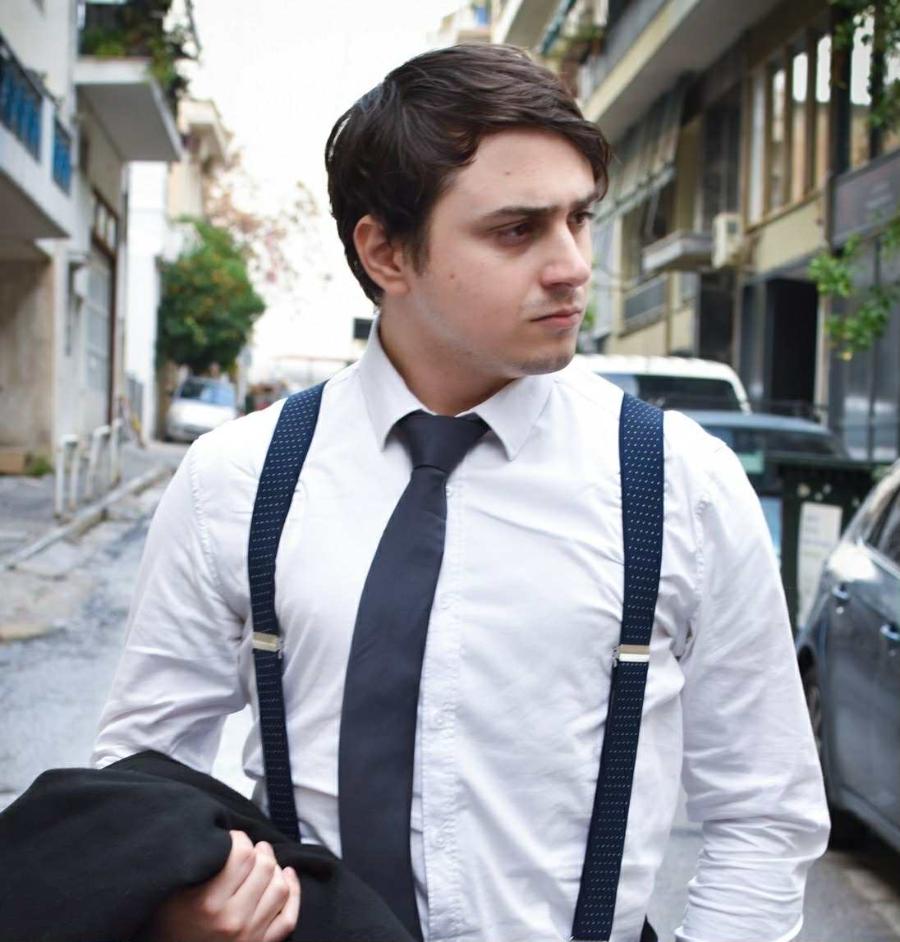
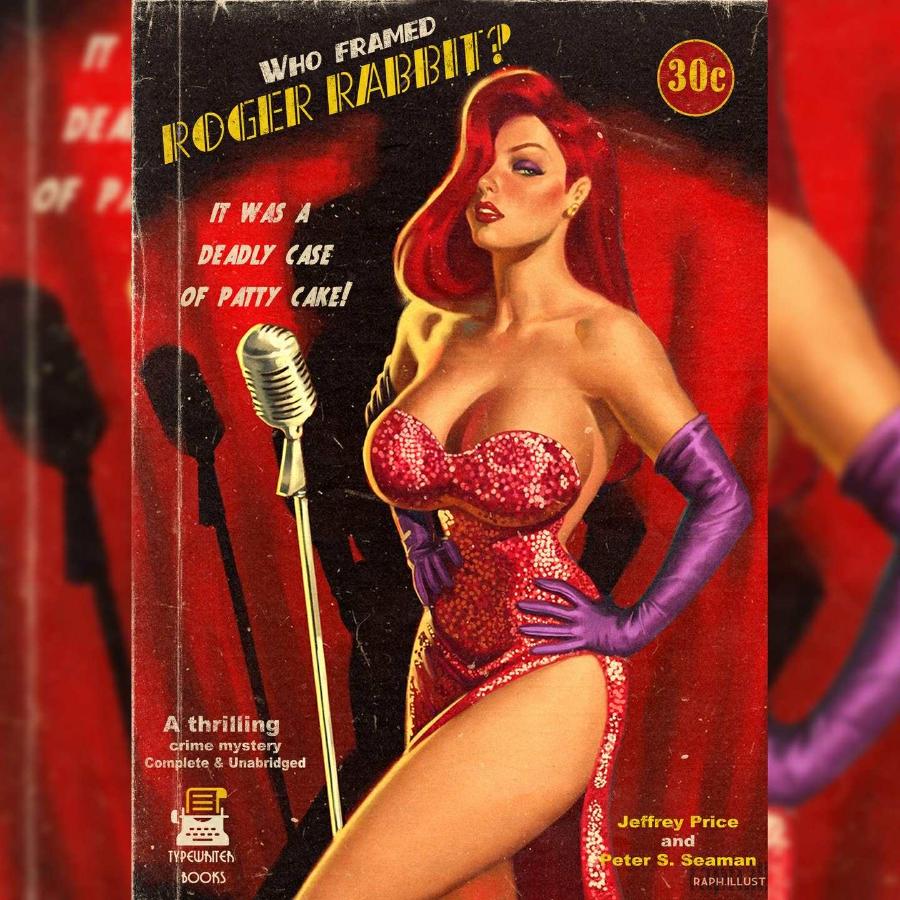
Athens-based illustrator Raph Illustration channels the timeless elegance of vintage pulp and noir through a modern lens, blending the cinematic allure of 1950s advertising art with the grit of golden-age comics. Influenced by masters like J.C. Leyendecker, Andrew Loomis, Gil Elvgren, and Frank Robbins, Raph’s work captures a nostalgic world of tailored suits, shadowed intrigue, and warm mid-century color palettes. A lifelong comic fan who began by sketching Spider-Man panels, he’s since become a fixture at Fantasy Festival Greece, earning acclaim for art that revives the glamour and storytelling power of illustration’s golden age. In this interview with Fanboy Factor’s Anthony Andujar Jr., Raph discusses his creative roots, process, and passion for keeping pulp art alive in the digital era.
Interviewee: Raph Illustration
Interviewer: Anthony Andujar Jr
Q1: What were your influences in illustration and comic books?
RI: See, this is a big, complicated puzzle. First, when I was younger, all I did was freehand copies from Marvel comic books. Basically, all I drew was Spider-Man; he was the primary reason back in primary school that I picked up a pencil. If I am not mistaken, I used to draw panels from the older comics from John Romita Sr. and Steve Ditko. Then, I had a lengthy anime and manga phase, I got heavily into Bleach, and for a while, I wanted to become a mangaka and basically be like Tite Kubo, the creator of Bleach. Afterwards, I started actually learning art instead of just copying what I saw and uploading it on Deviantart. Slowly but surely, I got into vintage and the golden age of illustration, so I started gathering info. Nowadays, I draw direct influence from Gil Elvgren, Andrew Loomis, Glen Orbik, and J.C. Leyendecker.
Q2: You’re an artist from Athens, Greece. How did your home environment impact your approach and journey as an artist? Additionally, how has Athens impacted your perception of art as a whole?
RI: The country in and of itself hasn’t really played much, if any a role in my journey. I always relied on the outside because art here has little to no branches to do much of anything – professionally or otherwise – my influences were always American or Japanese, and as such, Athens in and of itself, while it had an era that was like a mini America in terms of clothes and movies, I myself looked elsewhere for my inspirations.
Q3: As an illustrator, you have a huge focus on noir, pulp, and classic pinups akin to the aesthetics of the 1950s gilded era. What is it about pulp art that drew your eye and led you to the kind of art you make today?
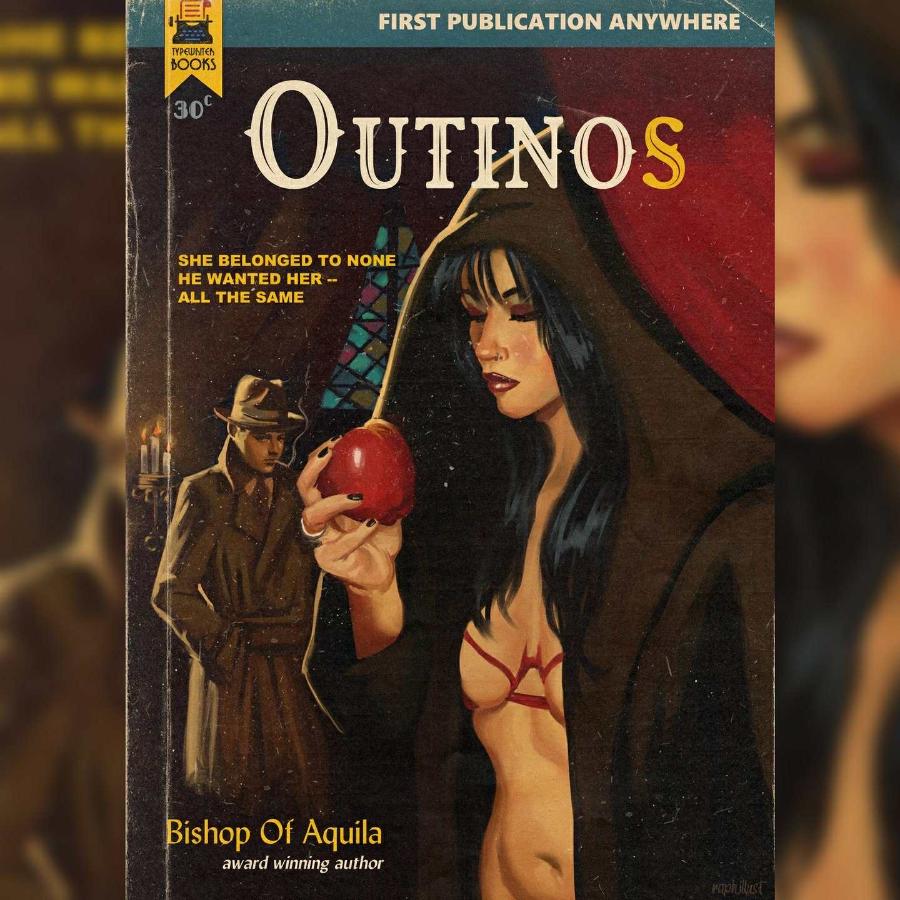
RI: My journey into vintage and generally mid-century aesthetics started when I was 8, although it took a backseat while I was exploring other things, the manga and the anime I mentioned. Here in Greece, there used to be this now inactive radio station called John Greek. During TV commercials, it used vintage comic panels as its advertising; it featured a man, the classic man with slicked back black hair, a suit, doing action or seducing women. It gave an overall action spy aesthetic, although it wasn’t actually James Bond. For the longest time, I was cracking my head trying to find who had drawn these panels and why the radio station was using them as its theme, even though the songs it had didn’t fit it at all. To make a long story short, the panels were taken from a newsprint story comic during WW2, if I recall, called Johnny Hazard, made by legendary artist Frank Robbins, which featured Johnny, a military pilot getting into adventures and saving the day. All of this just gave me a nostalgic feeling, even though I myself NEVER LIVED that period, still, it gave me a warm feeling, of an era that somehow called to me. Suits, hats, pinup girls, fashion, crime movies, the warm colors in the art, how everything looked, I fell in love with what was the art of that time period, and as years passed, I claimed it for myself. I wanted to revitalize it, to make it back, return it to the highlight.
Q4: What are the challenges and hurdles that come with making the art that you do? How do you navigate that, especially in a day and age where A.I. slop runs rampant?
RI: I am against the use of AI; however, as an artist, I do not fear it. The thing with AI is that the more popular it becomes, the more people will stray away from it, due to the backlash from the community and people that have lost their jobs, when a company – or anyone – uses AI, their product or advertisement is seen as fraudulent or cheap, there is a limit to how much you can cut into labor, and AI is exactly that limit. Even if tomorrow AI becomes indistinguishable from real art, now that people KNOW that it exists, everything online will be heavily scrutinized, and eventually, no matter how convincing it may be at first glance, people will find out. Other than that, I myself am not in the industry. I work freelance when it comes to this, commissions mostly from clients that want covers for books or just personal art. It is primarily a hobby, but I do wish to make it my full-time profession someday.
Q5: When you illustrate, do you draw within an office, or do you find a place within your city to draw? What’s your work environment like when you’re in the zone?
RI: I draw within my home. I am a simple man, I let something play in the background, be it music, a podcast, a video, sometimes even a movie or a show, and then I just draw.
Q6: Is there a particular soundtrack or compilation of music that you like to work on when illustrating? What’s your go-to and how does it inform your work?
RI: When I REALLY want to get into the mood, I always let old-timey smooth jazz play in the background. There are these channels on YouTube that work like an ASMR. One of my favorites is that it’s Christmas or winter, and you can hear oldies playing from another room; it does wonders to make me fall into the zone.
Q7: You recently boothed at Fantasy Festival Greece. What was that experience like for you at this stage of your career as an illustrator?
RI: Indeed! This was my 4th booth experience at the same convention. It went quite great, better than the previous times, given the fact that there is HEAVY competition due to the fact that an artist’s alley is filled with so many booths that you need to stand out somehow. I mostly rely on commissions for extra profit, but conventions work really well if you have something special to give.
Q8: Are there any projects that readers should keep an eye out for? Where can readers find and follow your work?
RI: Oh yes, there are some projects I’ve done behind the scenes that, due to release dates from their authors, I am not at liberty to discuss or upload YET, but they will be uploaded, and I bet people who love detectives and their adventures with the illusive femme fatale will surely love what we have in store. As for where else I upload my work, my primary social media is Instagram (https://www.instagram.com/raph.illust/), it’s the only place where my work has gotten any traction. I also have a slightly out-of-date Twitter… or X, I should say, which I hardly use because it appears I don’t exist there, but for anyone interested, they can find it here https://x.com/raphillust
 Dan Kleiner